

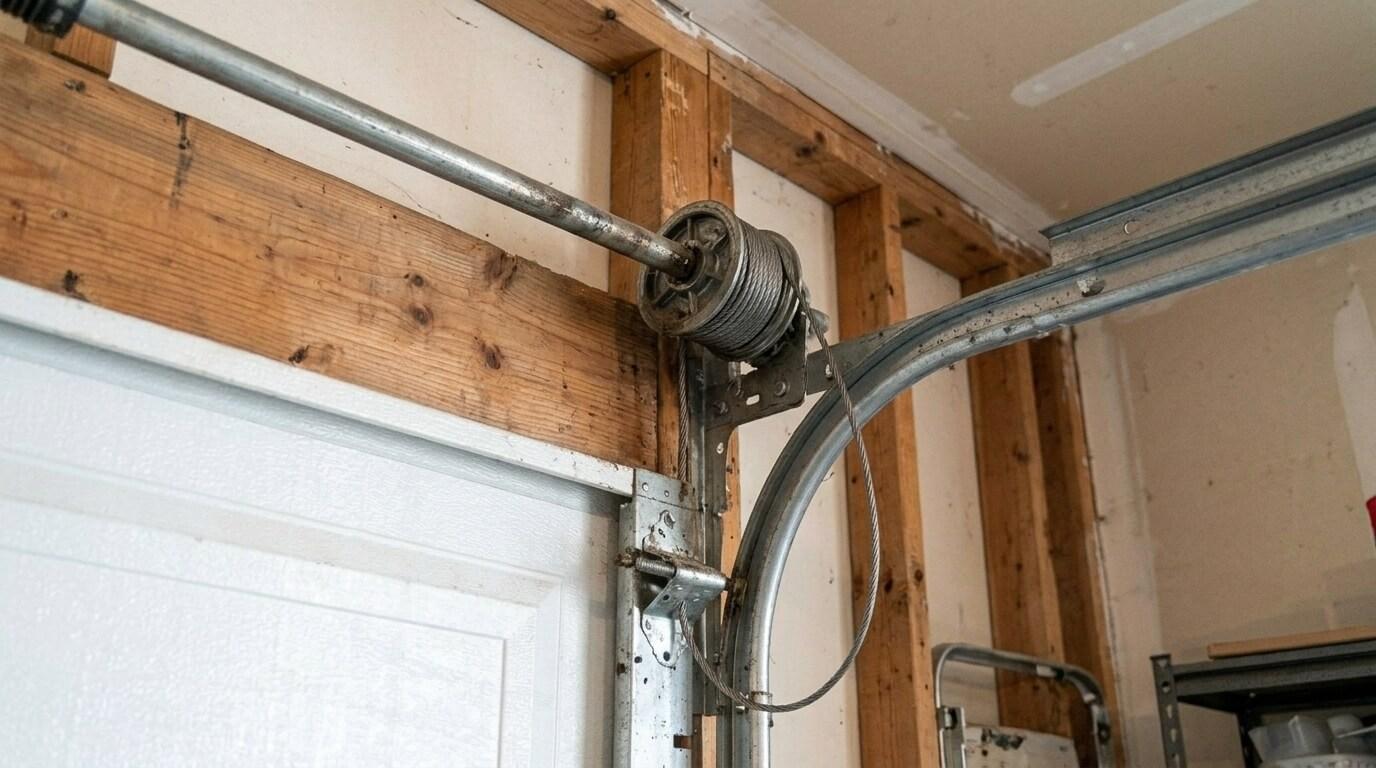

Putting a cable back on its drum can feel like a fix. The door moves again, the cable looks seated, and you move on. Then it slips off a second time, then a third, and it becomes clear the real problem was never addressed. If your garage door cable keeps coming off drum, something in the system is out of balance, misaligned, or worn, and the cable is simply the part that shows it.
This guide explains how the cable and drum are supposed to work together, the most common reasons a cable slips off, how to read the clues, and why this is a job for trained technicians rather than a weekend project. It's written for homeowners and property managers in The Woodlands, where humidity, heat, and busy household use all keep garage door hardware working hard.
How the Cable and Drum Work Together
On a torsion spring system, the springs and a metal shaft sit above the door. At each end of the shaft is a cable drum, a grooved wheel that winds and unwinds the lift cable. The other end of each cable attaches to a bracket at the bottom corner of the door.
When the door rises, the shaft turns, the drums wind the cables up, and the springs' stored energy does most of the lifting. When the door lowers, the drums unwind in a controlled way. The grooves guide the cable so it wraps neatly and stays under tension.
That design depends on a few things being true at once:
-
Both springs hold the right amount of tension
-
The shaft, drums, and bearing plates are aligned
-
Each drum is securely fastened to the shaft
-
The cables are the right length and in good condition
-
The door travels evenly in its tracks
If any of those conditions fails, a cable can lose tension, jump out of its groove, and slip off the drum.
(Extension spring systems work differently. Cables run through pulleys along the tracks rather than around drums, but similar principles apply: a slack or misaligned cable can jump a pulley.)
The Most Common Reasons a Cable Slips Off
1. A Broken or Weakened Spring
When a spring breaks or loses tension, the cable it supports goes slack. A slack cable can unwind loosely from the drum and jump out of the groove. This is one of the most common causes, and it's why a "reattached" cable fails again if the spring problem remains.
2. Uneven Spring Tension
Even if both springs are intact, uneven tension can put one side of the door under more load than the other. That imbalance can cause one cable to loosen while the other stays taut, which can lead to slipping.
3. A Door That Binds or Stops While Moving
If the door catches on something while rising, such as a bent track, a worn roller, or an obstruction, the drums can keep turning and release slack in the cable. When the door finally moves again, the cable may not seat properly.
4. Drum Problems
The drum itself can be the culprit:
-
Loose set screws that allow the drum to shift or spin on the shaft
-
A worn or damaged drum with grooves that no longer guide the cable
-
A drum that's the wrong fit for the cable or the door
-
A drum that has moved out of position along the shaft
5. Shaft or Bearing Plate Misalignment
A bent shaft, a loose or worn bearing plate, or a shaft that's no longer level can make the drums turn unevenly. That uneven motion can pull a cable off its groove.
6. Cable Wear or Damage
Fraying, kinks, rust, and stretched or damaged cables don't wrap cleanly. A cable with a kink or deformation may not stay seated.
7. Incorrect Cable Length or Installation
If one cable is slightly longer or shorter than the other, or wasn't wrapped correctly during a previous repair, the door can hang unevenly and the cable can slip. DIY attempts and rushed repairs are common sources of this issue.
8. Bottom Bracket or Door-Side Problems
Loose or damaged bottom brackets, bent hardware, or a door that's out of square can change how the cable tracks and allow it to jump.
9. Track or Roller Problems
Misaligned tracks or worn rollers make the door travel unevenly, which can place uneven stress on the cables.
10. Rust and Environmental Wear
Humidity encourages rust on cables, drums, and set screws. Corrosion makes surfaces rougher and parts less reliable, which can contribute to slipping over time.
A Quick Reference: Clue to Likely Cause
|
What You Notice |
Likely Contributing Cause |
|
Cable slips off after a loud bang |
Broken spring |
|
One side keeps slipping, the other stays tight |
Uneven tension or a loose drum |
|
Door hangs crooked |
Unequal cable length or tension |
|
Cable has visible kinks or fraying |
Cable damage |
|
Drum looks shifted or wobbles |
Loose set screws or shaft problems |
|
Door sticks or binds partway |
Track, roller, or obstruction problem |
|
Problem returns after a previous fix |
Root cause not addressed |
|
Rust around drums or cables |
Corrosion-related wear |
Because multiple causes can overlap, this table is a starting point for understanding, not a diagnostic tool.
Warning Signs Before It Happens Again
A cable that has slipped once is telling you something. Watch for:
-
A door that looks crooked or hangs lower on one side
-
Slack in one cable compared with the other
-
Noises from above the door, such as squealing or popping
-
A door that jerks or binds as it moves
-
A door that feels heavier than usual
-
Cable strands that look frayed or kinked
-
A drum that appears off-center or moved along the shaft
Observe from a safe distance. Keep your hands away from cables, drums, springs, and brackets while the system is under tension.
Why This Isn't a DIY Repair
It's tempting to look at a cable dangling off a drum and think it just needs to be rewound. In practice, this is one of the more dangerous situations in garage door maintenance:
-
The springs hold stored energy, and the cables, drums, and shaft are part of that system. Mishandling any of them can cause serious injury.
-
Resetting a cable without addressing the cause often leads to repeat failure.
-
Proper winding and balance require specialized tools and procedures.
-
A cable seated incorrectly can damage the drum, the door, and the opener.
-
The door itself is heavy and may be unstable when a cable is off.
If a cable has slipped, treat the door as unsafe to operate until a technician has inspected it.
What to Do If It Happens
-
Stop using the door, with the opener and by hand
-
Keep people, pets, and vehicles clear of the door's path
-
Don't touch cables, drums, springs, or bottom brackets
-
Don't try to rewind or force the cable
-
Take notes and photos from a safe distance: which side slipped, how the door sits, what you heard
-
Mention how many times it has happened, since repeated slipping is a useful clue
-
Call a professional
What a Proper Fix Looks Like
A lasting solution addresses the reason the cable slipped, not just the cable. A thorough visit typically involves:
-
Inspection of the springs, cables, drums, shaft, bearing plates, brackets, tracks, and rollers
-
Securing the door and safely controlling spring tension
-
Identifying the root cause, such as a failed spring, loose drum, or misalignment
-
Replacing or correcting the failing parts, which may include springs, cables, drums, or hardware
-
Re-seating and winding the cables correctly and setting equal tension on both sides
-
Checking track and roller alignment
-
Testing balance and travel, including the opener's safety reversal
-
A summary of what was found and what to monitor
Many technicians also recommend replacing both cables or both springs together when one has failed, since parts wear at similar rates. Ask your technician to explain the reasoning.
Why Local Conditions Matter
The Woodlands' humid, warm climate makes rust and lubricant breakdown more likely, and storm season brings power surges and moisture. Busy households and rental properties add cycles quickly. None of that makes a slipping cable inevitable, but it's a good reason to inspect hardware regularly and to treat small changes, like a slightly crooked door, as meaningful.
Choosing Someone to Fix It
Because cables, drums, and springs are safety-critical, look for a provider who explains the cause instead of just resetting the cable. Useful questions include:
-
Are you licensed and insured?
-
Will you inspect the springs, drums, shaft, and tracks, not just the cable?
-
How will you confirm the tension and balance are correct?
-
Is your estimate written and itemized?
-
What warranty applies to parts and labor?
A local company such as Garage Doors Woodlands TX is an example of the kind of provider homeowners and property managers in the area can compare. If you'd like to see how a focused provider describes the problem and its solution, reading about why a garage door cable keeps coming off drum can help you judge whether their approach covers the inspection and root-cause diagnosis described here. For anyone weighing options, professional garage door repair that addresses the underlying cause tends to save time and money compared with repeated resets.
Preventing a Repeat
-
Inspect visually twice a year for slack, fraying, rust, or a door sitting unevenly (from a safe distance)
-
Lubricate rollers and hinges every few months with a silicone-based lubricant
-
Address rust early, especially after wet seasons
-
Keep vehicles and equipment clear of the door and tracks
-
Check balance annually with the door closed, using the release cord and lifting about halfway; it should stay put
-
Schedule an annual professional inspection covering springs, cables, drums, and brackets
-
Don't ignore a cable that has slipped once, since it rarely resolves itself
Frequently Asked Questions
Can I just put the cable back on the drum myself? It isn't recommended. The cable, drum, springs, and shaft are part of a high-tension system, and resetting a cable without finding the cause often leads to the same problem.
Why does the cable come off only on one side? One-sided slipping often points to uneven tension, a loose or worn drum, or a bottom bracket or track problem on that side.
Does a broken spring always cause this? It's a common cause, but not the only one. Drum, shaft, cable, and alignment issues can also be responsible.
Is it safe to use the door if the cable slipped but the door still moves? It's best not to. A cable that has slipped can fail again at any time, and the door may be unbalanced or unstable.
Do I need to replace the drum? Only if it's worn, damaged, or the wrong fit. A technician can tell you after inspecting it.
Should I replace both cables? Many technicians recommend it, since both have experienced similar wear. Ask your technician to inspect the second cable and explain their recommendation.
Can rust cause the cable to slip? It can contribute by roughening surfaces and weakening parts over time, especially in humid areas.
Final Thoughts
A garage door cable that keeps coming off the drum is a symptom, not the problem itself. Broken or uneven springs, loose or worn drums, misaligned shafts, damaged cables, and door-side binding can all be responsible, and resetting the cable only hides the cause. Stop using the door, keep your distance from tensioned parts, and have a professional find the root issue so the fix actually lasts.


