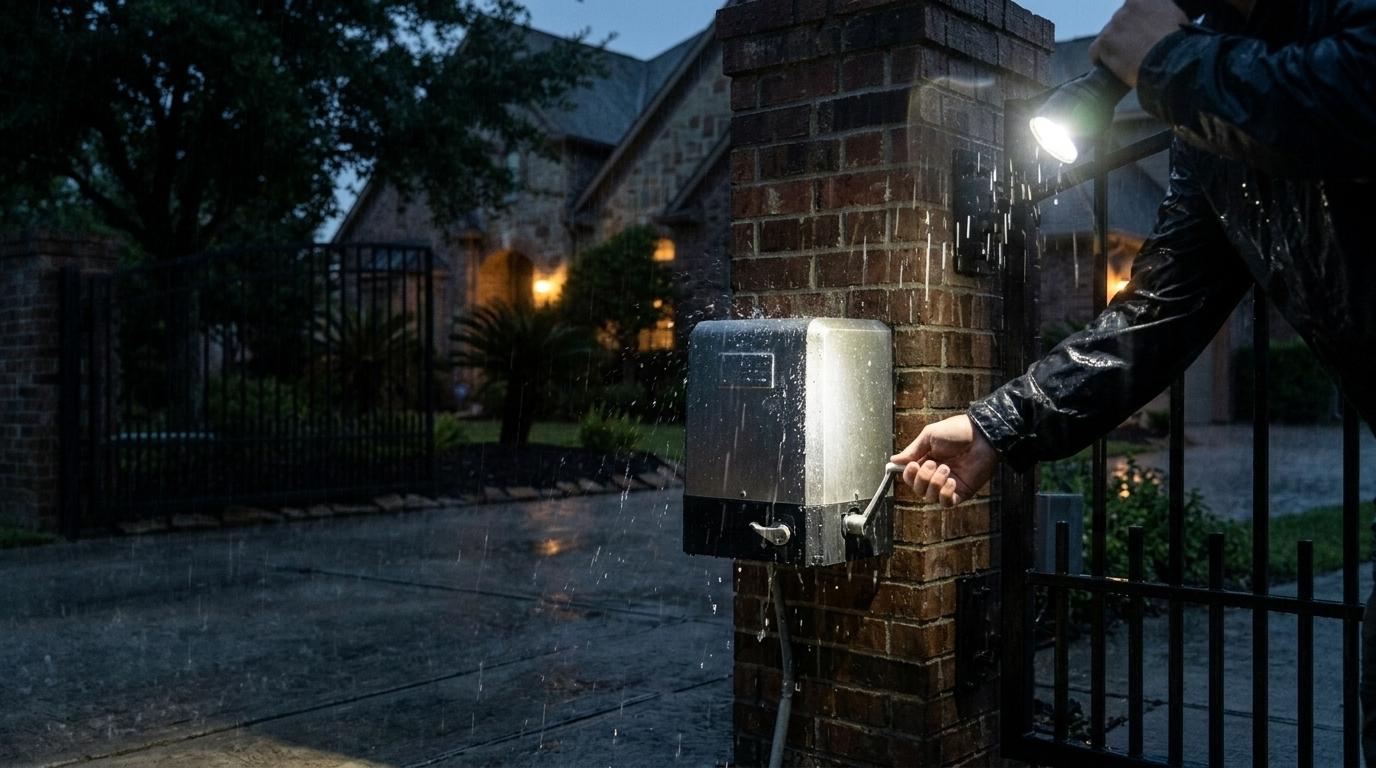
What to Do When Your Gate Stops Working During an Emergency

Most gate failures are an inconvenience. A few arrive at the worst possible moment: when a storm is bearing down, when the power has gone out, when an ambulance is on its way, or when you need to leave quickly and the gate won't budge. In those moments, a gate stops being a piece of property hardware and becomes a bottleneck between your household and help. Knowing in advance how your gate behaves, how to open it safely without power, and when to call for emergency gate repair can turn a frightening moment into a manageable one.
This guide is written for homeowners and property managers in League City and the surrounding area. It focuses on gates that fail when it matters most: during storms and outages, medical or fire emergencies, evacuations, and security incidents. It covers what to do right now, how to prepare, and how to get the gate working again afterward.
Why Gates Fail at the Worst Times
Emergencies and gate failures often arrive together, because the same events cause both:
-
Power outages leave automatic operators without electricity
-
Storm surges and lightning can damage control boards and power supplies
-
Heavy rain and flooding can reach control boxes, keypads, and underground operators
-
Wind and debris can bend frames, knock sensors out of alignment, or block the gate's path
-
Aging batteries fail precisely when a backup is needed
-
Panic and haste lead people to force gates, which can make failures worse
Gulf Coast storm season makes this combination especially relevant for League City households.
Know Your Gate's Emergency Behavior Before You Need It
The calmest response comes from knowing what your gate does when something goes wrong. Check these in advance:
|
Question |
Why It Matters |
|
What happens when power is lost? |
Some gates stay locked, others stay unlocked, and some have battery backup for a limited time |
|
Where is the manual release? |
You'll need to find it quickly, possibly in the dark |
|
Do you have the key or tool for it? |
Many releases require a key, lever, or specific procedure |
|
Is there a pedestrian gate or alternate exit? |
It can serve as a way out when the main gate is stuck |
|
How do emergency responders get in? |
Some properties and communities require a specific entry method |
|
Who has the codes and remotes? |
Family members, caregivers, and neighbors may need access |
Writing down the answers and sharing them with everyone in the household is one of the most useful things you can do.
What to Do Right Now: A Calm Step-by-Step Response
If your gate stops working in an emergency, work through these steps in order:
-
Prioritize people. If someone is injured or in danger, call emergency services first. Gate repair can wait.
-
Stop operating the gate. Repeatedly pressing the remote can worsen faults and drain batteries.
-
Check the obvious. Look at the operator's lights, the remote battery, and whether power is on.
-
Don't force the gate. Pulling, pushing, or driving into a stuck gate can damage it and cause injury.
-
Use the manual release only as the manufacturer directs, and only when people and vehicles are clear of the gate's path.
-
Look for another way out. A pedestrian gate, a side exit, or a neighbor's access may be available.
-
Keep people away from exposed wiring, water-damaged equipment, or anything that smells burnt.
-
Document what you see, if it's safe to do so, with photos for later insurance or repair needs.
-
Call a professional when the situation is stable.
Handling Common Emergency Scenarios
Power Outage or Storm
-
Don't assume the gate will open or close normally
-
If the gate has battery backup, remember it has a limited run time
-
Use the manual release if you need to leave or let someone in, following manufacturer directions
-
After the storm, don't resume normal use until the gate and its safety systems have been checked, especially if there was flooding, high wind, or lightning
Evacuation or Leaving Quickly
-
Make sure everyone knows how to open the gate manually before storm season
-
Test the release in advance, not for the first time during an evacuation
-
Keep a key or tool for the release in an accessible place
-
Follow guidance from local officials on when and how to evacuate
Medical or Fire Emergency
-
Call emergency services immediately
-
Tell the dispatcher about the gate, including how responders can get in, whether it's open, and any access code
-
Open the gate manually if it's safe, or have someone meet responders at the entrance
-
Keep the driveway clear
The Gate Is Stuck Open
-
Keep vehicles and people clear of the gate's path
-
Lock exterior doors and garage doors
-
Consider temporary security measures where safe and practical
-
Tell the repair provider the gate is open so they can prioritize
The Gate Is Stuck Closed
-
Check power and batteries first
-
Use the manual release as directed
-
Arrange alternate access if possible
-
Tell anyone en route, such as family members or responders, how to reach you
Suspected Tampering or Forced Entry
-
Don't touch or alter anything until you've decided whether to contact the police
-
Take photos of any damage
-
Arrange temporary security and a prompt inspection of latches, locks, and the operator
What Not to Do in an Emergency
|
Don't |
Why |
|
Force the gate open or closed |
Can cause injury or additional damage |
|
Open the operator or control box |
Electrical and mechanical hazards |
|
Bypass safety sensors |
Removes protection for people and vehicles |
|
Touch wiring or equipment that's wet or damaged |
Risk of shock |
|
Drive into a stuck gate |
Can damage the gate, the vehicle, and the operator |
|
Tape, tie, or wire parts together |
Creates new hazards and hides the problem |
|
Assume the gate will work after a storm |
Surges, moisture, and wind can cause hidden damage |
What to Tell a Provider When You Call
Clear information helps a technician prioritize and prepare:
-
Your location and property type
-
What happened and when
-
Whether the gate is open, closed, or partway
-
Whether there was a storm, outage, impact, or tampering
-
Smells, sparks, or unusual noises
-
Whether anyone needs urgent access
-
Your gate type: swing, sliding, or other
-
What you've already tried
-
Photos, if you have them
Finding Help Wisely
When the pressure is on, it's tempting to call the first number you find. A little judgment pays off. Useful questions include:
-
Are you available now, and how soon can you arrive?
-
Are you licensed and insured?
-
Do you work on my gate type and operator brand?
-
Will you provide a written estimate before work begins?
-
What warranty covers parts and labor?
Availability varies from company to company, so it's worth asking exactly what "emergency" service means for any provider you contact. A local company such as Level Up Garage Door Pros is an example of the kind of provider League City homeowners can compare. If you'd like to see how a focused provider describes its approach, reading about Emergency Gate Repair can help you judge whether their process and availability fit your needs.
After the Emergency: Getting the Gate Back to Safe Operation
Once the immediate situation has passed, don't skip the follow-up. A gate that opens again isn't necessarily a gate that's safe.
-
Have it inspected for storm, surge, water, or impact damage
-
Test safety sensors and reversal
-
Check batteries and power supplies, and replace any that have been weakened
-
Inspect posts, hinges, and the frame for movement or damage
-
Review your access codes and remotes, especially if the property was exposed
-
Update your emergency plan based on what worked and what didn't
If the gate has been repeatedly unreliable or is reaching the end of its life, it may be worth asking about gate installation as part of the plan, so you can compare repairs against equipment better suited to your household's needs.
Preparing Before the Next Emergency
-
Test the manual release at least once a year, and before storm season
-
Replace backup and remote batteries on a schedule
-
Keep a key or tool for the release where everyone who needs it can find it
-
Write down emergency contacts, including a gate provider and your property manager if applicable
-
Share access codes with trusted people who may need them
-
Check how your community or local responders expect to access the property
-
Take baseline photos of the gate and its hardware
-
Schedule an annual inspection to catch problems before they strike
-
Trim vegetation away from the gate, sensors, and solar panels
Frequently Asked Questions
Should I call emergency services if my gate won't open? Only if there's an injury, fire, or immediate danger. A stuck gate by itself calls for a repair provider, but tell emergency dispatchers about it if responders need access.
Will my gate open during a power outage? It depends on your system. Some have battery backup, and most have a manual release. Learn how yours works before you need it.
Can I use my vehicle to push a stuck gate open? No. It can damage the gate, the vehicle, and the operator, and it can cause injury.
How often should I test the manual release? At least once a year, and before storm season, so the first time isn't during an emergency.
Is it safe to use the gate after flooding or heavy rain? Don't use or touch electrical components that are wet or damaged. Have the gate inspected first.
What should I do if I'm a property manager and tenants are stuck? Keep people clear, use the manual release as directed if it's safe, arrange alternate access, and call a provider while communicating with tenants about what's happening.
Final Thoughts
A gate emergency is stressful, but most of the work happens before it begins. Learn how your gate behaves without power, find and test the manual release, keep batteries fresh, and share the plan with your household. When something does go wrong, make people safe first, avoid forcing or disassembling anything, and call a professional once things are stable. That combination of preparation and calm gives you the best chance of getting through the emergency and getting your gate back to reliable service.