


How Can Gangnammould Plastic Bucket Mould Support Efficient Production
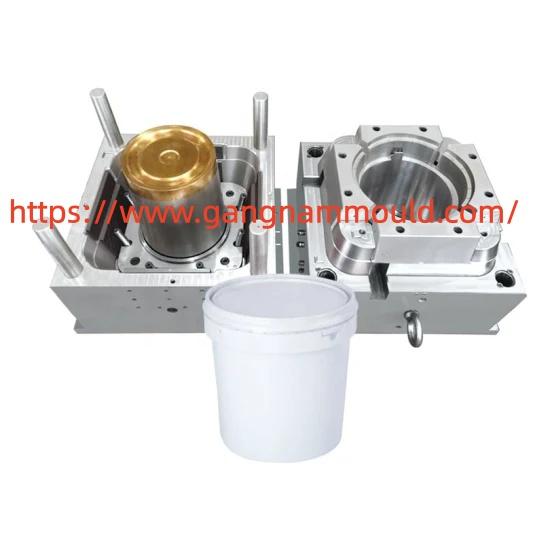
Plastic Bucket Mould selection involves more than comparing quotations or reviewing product photographs. Buyers need to consider design requirements, production capacity, material compatibility, maintenance arrangements, and long term operating expenses before making a purchasing decision. For manufacturers producing containers for household products, construction materials, agricultural applications, or industrial storage, suitable tooling can influence product consistency and daily manufacturing efficiency. Understanding these factors helps purchasing teams communicate their requirements clearly and make informed investment decisions.
One important consideration is the intended application. A bucket used for paint may require different structural characteristics from a container designed for food ingredients, cleaning products, or outdoor storage. Buyers should define the required capacity, wall thickness, rim structure, handle position, and overall dimensions before discussing a project with a tooling supplier. Providing drawings, reference samples, or three dimensional product files can help engineers evaluate the design and identify potential manufacturing challenges at an early stage.
Material selection also deserves careful attention. Different plastic resins have different flow characteristics, shrinkage behavior, and processing requirements. Polypropylene is commonly used for many everyday containers because of its practical balance of weight, durability, and processing suitability. However, the appropriate resin depends on the intended use, required performance, and applicable regulations. Buyers should communicate their preferred material and production conditions so that the tooling design can accommodate the expected processing requirements.
Cooling system design is another factor that can influence manufacturing performance. During injection molding, the plastic must cool sufficiently before the finished component can be ejected. Uneven cooling may contribute to warpage, dimensional variation, or surface defects. Properly positioned cooling channels can support more consistent temperature management throughout the production cycle. When evaluating a supplier, buyers should ask how the cooling arrangement is planned, how difficult areas will be managed, and whether the design supports the anticipated operating conditions.
Cavity configuration should match the production target and available equipment. A single cavity arrangement may suit certain specialized applications or lower volume requirements, while multiple cavities can increase output when production demand justifies the additional tooling investment. However, higher cavity counts also introduce considerations involving mold dimensions, machine capacity, filling balance, cooling performance, and maintenance. Buyers should evaluate the relationship between expected output and overall operating costs rather than choosing a configuration based on production volume alone.
Manufacturing precision and quality control are equally important. Small variations in dimensions can affect bucket stacking, lid fit, handle assembly, and compatibility with automated packaging systems. Buyers should discuss dimensional tolerances, inspection procedures, surface finish requirements, and the method used to verify sample parts. A clear acceptance process helps both parties establish realistic expectations before mass production begins. Reviewing trial samples under representative processing conditions can also reveal issues that may not be apparent from drawings alone.
Maintenance requirements should be discussed before an order is finalized. Tooling may experience wear around moving components, ejector mechanisms, guide systems, and other working surfaces during repeated production cycles. Accessible components, appropriate steel selection, and practical maintenance procedures can help simplify routine servicing. Buyers should ask about recommended cleaning practices, spare parts availability, maintenance documentation, and technical support arrangements. These details are particularly relevant for factories operating multiple shifts or managing several production lines.
Communication during customization can also affect project progress. Before manufacturing begins, both parties should confirm product drawings, dimensional requirements, resin specifications, expected output, machine parameters, delivery expectations, and sample approval procedures. Changes introduced after tooling production has started may require engineering adjustments and additional expenses. A documented project plan helps reduce misunderstandings and gives purchasing teams a clearer basis for evaluating progress.
As a tooling manufacturer, Gangnammould works with buyers to discuss application requirements and practical design considerations for plastic container production. When comparing suppliers, purchasers should review relevant manufacturing experience, engineering communication, quality inspection arrangements, and the proposed project scope instead of relying solely on the quoted price. A clear understanding of these details can support a more predictable purchasing process and help align tooling decisions with actual factory needs. Buyers planning a new container project can review the available product information and discuss their specifications through https://www.gangnammould.com/product/ to identify an appropriate direction for their manufacturing requirements.

 English
 Arabic
 French
 Spanish
 Portuguese
 Deutsch
 Turkish
 Dutch
Dutch
 Italiano
 Russian
 Romaian
 Portuguese (Brazil)