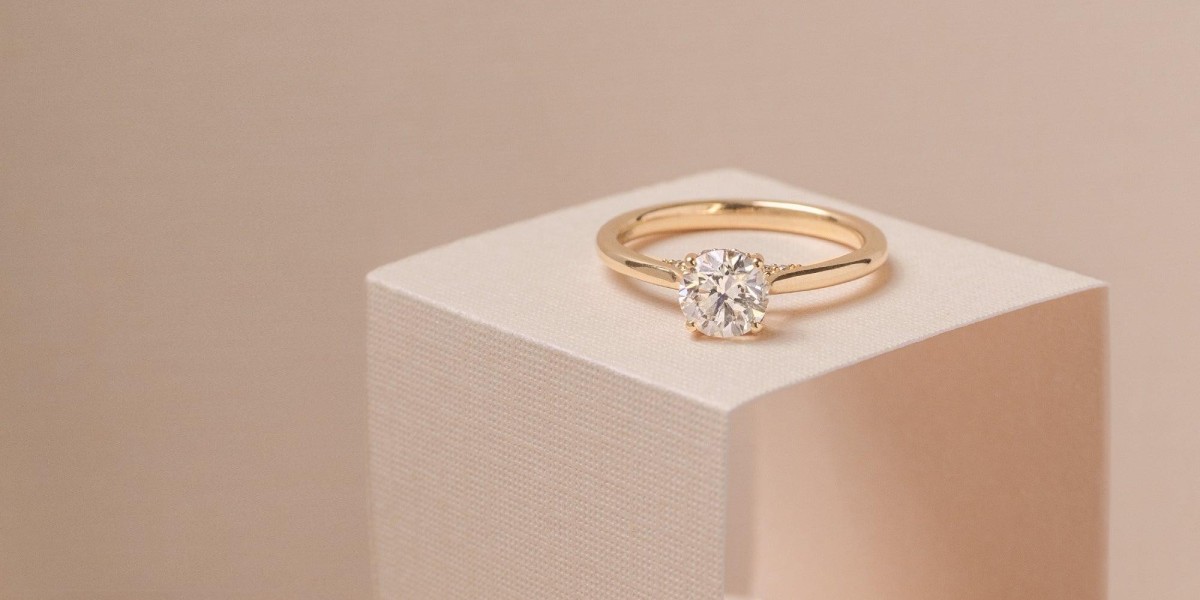

An engagement ring is easier to choose when you think about the person who will wear it rather than starting with a product page.
Consider the jewelry they already wear. Do they usually choose simple bands or pieces with several stones? Do they prefer yellow gold, white metals, or rose gold? Do they spend a lot of time working with their hands?
These small observations can help narrow down hundreds of choices.
A round diamond is a practical starting point because its circular shape works with many engagement ring settings. A lab grown round diamond engagement ring can be paired with a solitaire, halo, three-stone, or diamond-accented band.
The goal is not simply to find an attractive ring. It is to find a design that makes sense for the person wearing it. If you want to shop round lab grown diamond rings online, read the complete product description and review the available specifications.
Set the Budget Before Comparing Designs
It is easy to become distracted by different diamond sizes when shopping for an engagement ring.
Setting a budget first gives you a clear starting point. Once you know what you are comfortable spending, you can compare diamonds and settings within that range.
Do not assume that a higher carat weight automatically means a better ring. A diamond's cut, color, clarity, measurements, and certification also deserve attention.
When comparing a round diamond engagement ring, look at the complete specifications instead of focusing on one number.
A ring with a smaller center diamond may have a more detailed setting, while another may place more of the budget into the center stone.
Understanding this difference can make comparisons much more useful.
Decide Where You Want the Attention
Think about what you want people to notice first.
A solitaire directs attention toward one center diamond. A halo adds a frame of smaller diamonds around the main stone. A pavé band distributes additional detail along the shank.
If you like the idea of surrounding the center stone, round halo engagement rings offer many variations.
The size of the halo matters. A closely fitted halo keeps the design concentrated around the center, while a larger halo creates a wider outline.
When looking at round cut halo engagement rings, compare the center stone, halo, and band together.
A detailed halo paired with a heavily decorated band creates a different result from a halo combined with a plain shank.
Understand the Diamond Before Choosing the Setting
The setting should complement the center diamond, so it helps to understand the stone first.
Round diamonds are assessed using characteristics such as cut, color, clarity, carat weight, measurements, symmetry, and polish.
Cut is particularly important because it relates to the diamond's proportions and facet arrangement.
If you are considering a round cut lab grown engagement ring, review the same diamond characteristics you would examine when comparing other diamonds.
Lab-grown diamonds are created through controlled laboratory processes and are available in round cuts as well as other shapes.
You may also encounter the phrase round cut lab made diamond rings while searching online. Different retailers may use different descriptions, but the individual diamond's grading information remains the important point to compare.
Choose the Right Setting for Daily Activities
The person's daily routine can help determine which setting makes sense.
Someone who works at a desk may have different practical needs from someone who works with tools, handles equipment, or spends much of the day using their hands.
The height of the center stone is worth considering.
A high setting raises the diamond above the finger, while a lower profile keeps it closer to the band.
Neither option is automatically right for everyone. Think about what feels practical for the person who will wear the ring regularly.
Also look at the prong arrangement and how securely the center stone is held within the setting.
Match the Band to the Lifestyle
The band is another part of the ring that should be chosen with everyday use in mind.
A thin band can create a lighter overall design, while a wider band provides more metal beneath the center setting.
Some bands are plain, while others include small diamonds or decorative details.
If you plan to buy round lab grown diamond rings, compare the band width with the size and measurements of the center stone.
Also consider how the engagement ring might be worn with a wedding band later. The shape and height of the engagement setting can affect how closely the two rings sit together.
Select the Metal Based on Existing Jewelry
Choosing the metal can be easier when you look at what the recipient already owns.
Yellow gold has a warm yellow tone. White gold and platinum provide a lighter metal finish, while rose gold has a pink-toned color.
If most of their jewelry is yellow gold, that can be a useful indication of what they may prefer. The same applies if they mainly wear white metals.
When comparing a round lab grown diamond ring, look at how the metal interacts with the diamond and setting.
This can also help you choose a ring that works with the jewelry they already have instead of requiring an entirely different combination.
Pay Attention to Ring Size
Ring size is an easy detail to overlook when focusing on the diamond.
If possible, find out the recipient's correct ring size before ordering. Borrowing a ring they already wear can sometimes help, provided you know which finger it fits.
If you are shopping as a surprise, discreetly checking with a close friend or family member may be another option.
A ring that is beautifully designed still needs to fit correctly.
Before ordering, check the available size range and any resizing policies.
Compare Before You Commit
Once you know the general design you want, create a shortlist.
You can explore round cut lab grown diamond rings and compare several options using the same criteria.
This makes it easier to spot meaningful differences between similar-looking rings.
For example, one ring may have a larger center stone but a simple band, while another may have a smaller center diamond with a halo and additional stones.
Shop Online With Care
Online jewelry shopping can save time and provide access to a wider selection, but product photographs are only one part of the buying process.
Pay attention to the diamond's grading information, metal type, setting, measurements, ring size, certification, and applicable return or resizing policies.
If you are searching for the best round lab grown diamond rings, compare the complete products rather than ranking them only by carat weight.
The ring with the largest center diamond may not be the one that best suits the wearer.
Think About Future Wear
An engagement ring often becomes part of someone's regular jewelry collection.
That means the design should work with the person's existing habits and future plans.
Consider whether they will wear a wedding band beside it, whether they prefer simple or detailed jewelry, and whether the setting fits their daily activities.
A lab grown round diamond ring can be designed in many different ways, so you can compare options based on these practical details.
This is also a good reason to avoid rushing into a purchase simply because one design catches your eye.
Review the Details Before Ordering
After choosing a few favorites, go back through the product information.
Check the center diamond, setting, metal, band width, ring size, certification, price, and available policies.
You can read more about round cut lab grown diamond rings while comparing different designs and learning more about their individual specifications.
Antiquecut offers round lab-grown diamond ring designs for shoppers looking at different center stones, settings, metals, and bands.
Choose What Makes Sense for the Wearer
There is no single combination that works for everyone.
Some people prefer a simple solitaire with a clear focus on the center stone. Others may want a halo, pavé band, or additional diamonds.
A lab grown round diamond engagement ring gives shoppers plenty of options without limiting them to one particular setting.
The best approach is to consider the whole picture: budget, diamond specifications, setting, metal, band, ring size, daily activities, and future wedding-band plans.
When those details are considered together, the decision becomes less about finding the most expensive or largest ring and more about finding a piece that genuinely fits the person who will wear it.