
A dent can happen in seconds, whether from a car park knock, a shopping trolley, a minor collision or hail. While some car dents are little more than cosmetic damage, others can affect the paintwork, body panel or underlying components.
Understanding your car dent repair options can help you determine whether a minor dent needs a simple fix or professional attention. The right solution depends on the dent's size, depth, location, paint condition and type of vehicle bodywork involved, so consulting a trusted car repair specialist can help you choose the most suitable repair method.
What Is Car Dent Repair?
Car dent repair is the process of restoring damaged bodywork as closely as possible to its original shape and appearance. Depending on the damage, a technician may use paintless dent repair (PDR), traditional bodywork techniques or specialist dent-removal equipment.
Small door dings and shallow dents can sometimes be repaired without repainting. Larger dents, sharp creases or damaged paintwork may require more extensive body repairs.
What Types of Car Dents Can Be Repaired?
Not every dent requires the same repair method. Common examples include:
Small door dings: Often caused by neighbouring vehicles or car park impacts.
Shallow panel dents: Minor depressions that have not significantly stretched the metal.
Deep dents: More substantial damage that may require professional bodywork.
Creased dents: Sharp folds in a panel can be more difficult to restore.
Paint-damaged dents: Cracked, chipped or missing paint may require conventional repair and repainting.
Bumper dents: Plastic bumpers may sometimes be reshaped depending on the extent of damage.
The location also matters. Dents near panel edges, body lines or areas with restricted access can be more challenging to repair.
What Are the Main Car Dent Repair Methods?
Paintless Dent Repair (PDR)
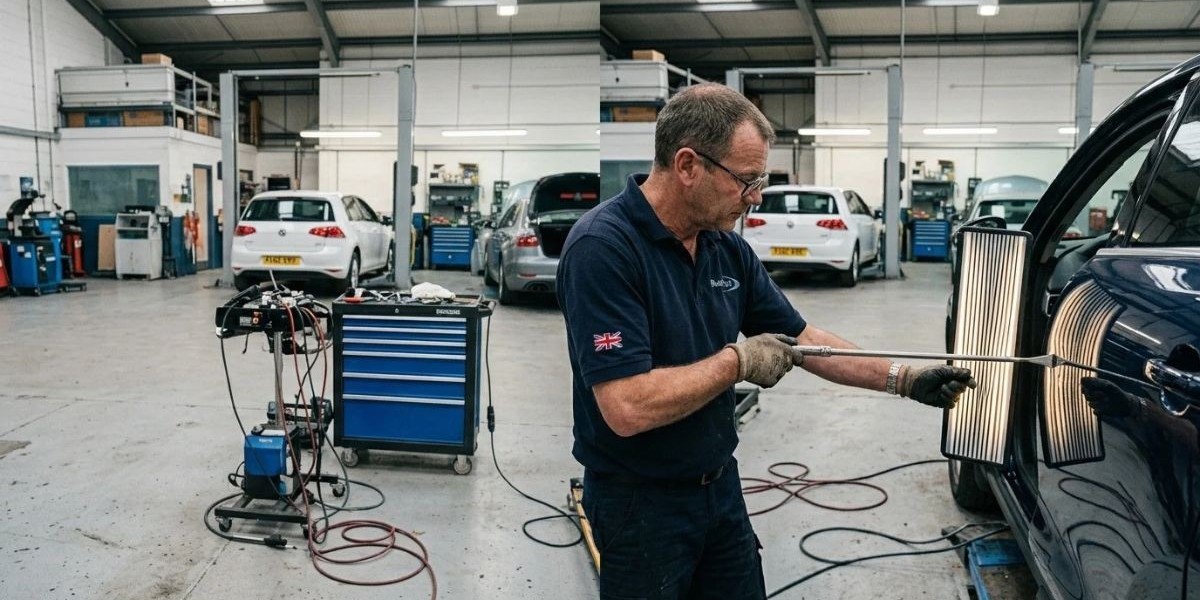
Paintless dent repair is a specialist technique for removing suitable dents without damaging or replacing the original paintwork. A trained technician uses specialist tools to carefully massage the panel back into its original shape, often working from behind the damaged area.
PDR can be particularly effective for small to medium dents where the paint remains intact. It can also be quicker than traditional bodywork because filling, sanding and repainting may not be necessary.
However, PDR is not suitable for every type of damage. Severe creases, stretched metal, damaged paint and certain panel locations may require another approach.
Traditional Bodywork Repair
Traditional car body repair may be necessary when the dent has damaged both the panel and its paintwork.
Depending on the severity, the process can involve reshaping or replacing the panel, applying filler, sanding, priming and repainting the affected area. Professional colour matching may also be required to achieve a consistent finish.
This approach generally involves more preparation and labour than PDR but can deal with a wider range of bodywork damage.
Dent Repair Kits
DIY dent repair kits can include suction cups, pulling tabs and other tools designed to remove minor dents. They may be useful for certain straightforward repairs, but using excessive force or the wrong technique can make the damage worse.
If the panel has a sharp crease, damaged paint or complex contours, professional assessment is usually the safer option.
Mobile Dent Repair
A mobile dent repair specialist can often inspect and repair suitable minor damage at your home or workplace. This can be convenient for small dents that do not require extensive bodyshop equipment.
For larger repairs, damaged paintwork or more complex bodywork, a dedicated repair facility may be more appropriate.
PDR vs Traditional Dent Repair
Feature | Paintless Dent Repair | Traditional Body Repair |
Original paint | Usually retained | May require repainting |
Best suited to | Minor, suitable dents | Larger or complex damage |
Filler | Usually unnecessary | May be required |
Repair time | Often shorter | Usually longer |
Paint matching | Generally unnecessary | Often required |
Suitability | Depends on dent and panel | Suitable for wider damage |
The best method depends on the condition of the panel rather than simply the size of the dent.
How Much Does Car Dent Repair Cost in the UK?
The car dent repair cost UK drivers pay can vary significantly. There is no universal price because every repair is different.
Factors that can affect the cost include:
Size and depth of the dent
Location of the damage
Accessibility behind the panel
Paintwork damage
Vehicle make and model
Number of dents
Repair technique
Local labour rates
A small dent that can be repaired using PDR may cost considerably less than a damaged panel requiring filling, preparation and repainting.
For an accurate estimate, have the vehicle assessed by a qualified dent repair specialist rather than relying solely on generic online prices.
Can You Repair a Car Dent Yourself?
DIY dent removal can be possible for very minor damage, particularly where the dent is shallow, the paint is intact and the panel is accessible.
However, avoid attempting a DIY repair if:
The paint is cracked or chipped
The dent has a sharp crease
The metal appears stretched
The damage is large or deep
The dent sits directly on a body line
You suspect damage behind the panel
Using excessive pressure or inappropriate tools can cause additional damage and potentially increase the final car bodywork repair cost.
What to Expect From Professional Dent Repair
A professional repair generally starts with an inspection of the damaged area. The technician will assess the dent's size, depth, location, paint condition and panel accessibility before recommending an appropriate repair method.
For PDR, specialist tools may be used to carefully restore the panel while preserving the original paint. If traditional bodywork is required, the repair may involve reshaping, filling, sanding, priming and repainting.
The vehicle should then be inspected to ensure the repaired area has an appropriate finish.
Should You Claim on Insurance for a Dent?
Whether to make an insurance claim depends on your policy, the circumstances of the damage, your insurance excess and the likely repair cost.
For a relatively minor dent, paying for the repair yourself may sometimes be more practical than making a claim. However, drivers should always check their policy terms and understand the potential consequences before deciding.
How to Choose a Reliable Dent Repair Specialist
Before booking car dent repair, consider the specialist's experience, customer reviews and examples of previous work. Ask which repair method they recommend and why, and request a clear quotation covering the proposed work.
For PDR, look for technicians with specific experience in paintless dent repair, particularly if preserving the vehicle's original paintwork is important.
Final Thoughts
The best car dent repair method depends on the type and severity of the damage. Minor dents with intact paint may be suitable for PDR, while larger dents, sharp creases and damaged paintwork can require traditional body repairs.
Rather than choosing a repair method based solely on price, assess the condition of the vehicle and obtain professional advice where necessary. A suitable repair can restore the appearance of your car while helping prevent a minor cosmetic problem from becoming a more expensive bodywork issue.