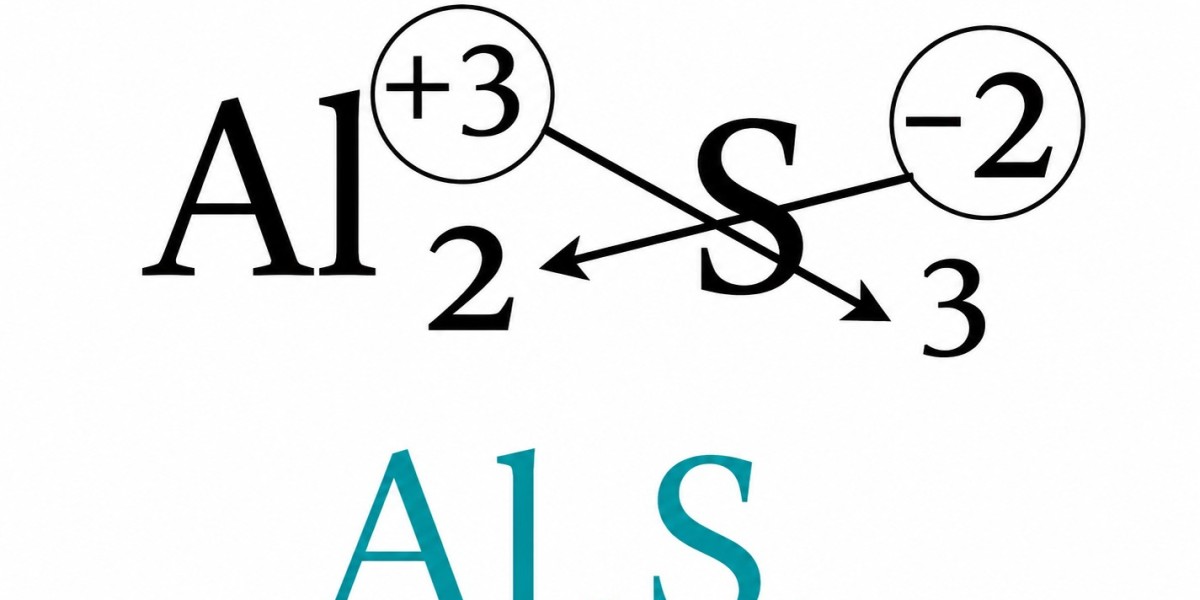

The chemical formula for aluminum sulfide is Al₂S₃. Aluminum sulfide is an ionic compound formed when aluminum combines with sulfur. Understanding its formula is useful for learning how elements form stable compounds through the transfer of electrons. Aluminum belongs to the metal group and commonly forms a positive ion, while sulfur is a nonmetal that commonly forms a negative ion. When these ions combine in the correct ratio, they produce aluminum sulfide. The formula Al₂S₃ represents the balance between aluminum and sulfide ions and provides important information about the composition and structure of this compound.
What Is Aluminum Sulfide?
Aluminum sulfide is a chemical compound made from aluminum and sulfur. It is generally described as an ionic compound because aluminum tends to lose electrons while sulfur gains electrons during compound formation. The resulting aluminum ions and sulfide ions are held together by electrostatic attraction. Aluminum sulfide is commonly represented by the formula Al₂S₃, showing that the compound contains aluminum and sulfur in a specific ratio. Its properties differ considerably from those of elemental aluminum and sulfur because the elements undergo chemical bonding to create a new substance.
What Is the Chemical Formula for Aluminum Sulfide?
The chemical formula for aluminum sulfide is Al₂S₃. The symbol Al represents aluminum, while S represents sulfur. The subscript attached to aluminum indicates that two aluminum atoms are present for every three sulfur atoms in the formula. This ratio is necessary because aluminum commonly forms an ion with a positive charge of three, while sulfur forms a sulfide ion with a negative charge of two. Combining these ions in the appropriate ratio produces an electrically neutral compound.
Why Is the Formula Al₂S₃?
The formula Al₂S₃ can be understood by looking at the common ionic charges of aluminum and sulfur. Aluminum generally forms Al³⁺ ions because it can lose three electrons to reach a more stable electronic arrangement. Sulfur commonly forms S²⁻ ions because it gains two electrons. Since the positive and negative charges must balance, two aluminum ions provide a total positive charge of six, while three sulfide ions provide a total negative charge of six. The charges therefore cancel, giving the neutral formula Al₂S₃.
How Is Aluminum Sulfide Formed?
Aluminum sulfide can form when aluminum and sulfur chemically react under suitable conditions. During this process, aluminum atoms lose electrons and sulfur atoms gain electrons. The transfer of electrons creates aluminum ions and sulfide ions, which then form the ionic compound aluminum sulfide. The overall chemical equation is commonly represented as 2Al + 3S → Al₂S₃. This equation shows that aluminum and sulfur combine in a specific proportion to produce aluminum sulfide.
Understanding Aluminum in Al₂S₃
Aluminum is the metallic element represented by the symbol Al. It commonly forms a three-positive ion, written as Al³⁺, when participating in ionic compounds. In aluminum sulfide, aluminum contributes its positive charge to the ionic structure. The presence of two aluminum ions is important because their combined positive charge balances the negative charge supplied by the sulfide ions. This charge relationship explains why the formula contains two aluminum atoms rather than an equal number of aluminum and sulfur atoms.
Understanding Sulfur in Al₂S₃
Sulfur is a nonmetal represented by the symbol S. When it forms an ionic compound with aluminum, sulfur commonly gains electrons and becomes a sulfide ion with a two-negative charge, written as S²⁻. Three sulfide ions provide a total negative charge that balances the positive charge from two aluminum ions. The sulfur portion of aluminum sulfide is therefore essential to creating an electrically neutral compound.
Ionic Structure of Aluminum Sulfide
The structure of aluminum sulfide is related to the attraction between positively charged aluminum ions and negatively charged sulfide ions. Ionic compounds are held together by electrostatic forces between ions with opposite charges. In Al₂S₃, the aluminum and sulfide ions arrange themselves in a solid structure that allows the charges to remain balanced. The exact structural arrangement can depend on the physical form and conditions under which the material exists, but the chemical composition remains represented by Al₂S₃.
How to Write the Formula for Aluminum Sulfide
Writing the formula for aluminum sulfide becomes easier when the ionic charges are understood. Aluminum has a common charge of three positive, while sulfide has a charge of two negative. The charges cannot be balanced by simply placing one aluminum ion next to one sulfide ion because their charges would not cancel. Instead, the smallest whole-number ratio that balances the charges requires two aluminum ions and three sulfide ions. This gives the final formula Al₂S₃.
Naming Aluminum Sulfide
The name aluminum sulfide follows standard ionic compound naming conventions. The metal is named first, so aluminum remains aluminum in the compound name. The nonmetal sulfur changes its ending to “-ide,” producing the word sulfide. Therefore, the compound is called aluminum sulfide. Because aluminum generally has a predictable ionic charge in this type of compound, a Roman numeral is normally not required in the basic name.
Physical Properties of Aluminum Sulfide
Aluminum sulfide is generally encountered as a solid material and has properties associated with ionic compounds. Its appearance and physical behavior can depend on factors such as purity, preparation method, and environmental conditions. Aluminum sulfide is also known for reacting with water, which is an important chemical characteristic. Understanding these properties helps distinguish aluminum sulfide from elemental aluminum and sulfur and demonstrates how chemical bonding can significantly change the behavior of the original elements.
Chemical Properties of Aluminum Sulfide
One of the important chemical characteristics of aluminum sulfide is its reaction with water. When aluminum sulfide comes into contact with water, it can undergo hydrolysis and produce aluminum hydroxide along with hydrogen sulfide. Hydrogen sulfide has a distinctive unpleasant odor and should not be deliberately generated or inhaled. This reaction demonstrates that aluminum sulfide is chemically reactive and should be handled according to appropriate laboratory and industrial safety practices.
Reaction of Aluminum Sulfide With Water
Aluminum sulfide can react with water according to a chemical process that produces aluminum hydroxide and hydrogen sulfide. A commonly represented balanced equation is Al₂S₃ + 6H₂O → 2Al(OH)₃ + 3H₂S. This reaction is particularly important when discussing the storage and handling of aluminum sulfide because exposure to moisture can cause chemical decomposition. The formation of hydrogen sulfide is one reason appropriate precautions are necessary when working with this compound.
Aluminum Sulfide and Hydrogen Sulfide
The relationship between aluminum sulfide and hydrogen sulfide is important because aluminum sulfide can generate hydrogen sulfide when exposed to water. Hydrogen sulfide is a toxic gas with a characteristic odor and can be dangerous at sufficient concentrations. This does not mean that aluminum sulfide itself is simply the same substance as hydrogen sulfide; rather, hydrogen sulfide can be a product of its reaction with water. Proper chemical handling and controlled conditions are therefore important when aluminum sulfide is used or studied.
Uses of Aluminum Sulfide
Aluminum sulfide has applications primarily within chemical research and specialized industrial processes. Its ability to react with water and participate in chemical transformations makes it useful for studying sulfide chemistry and related reactions. It may also appear as an intermediate or reagent in certain chemical processes. Its applications are more specialized than those of common aluminum compounds, and its reactive nature means that handling and storage requirements should be considered carefully.
Importance of Aluminum Sulfide in Chemistry
Aluminum sulfide is useful as an example when studying ionic bonding, oxidation states, charge balancing, chemical formulas, and reaction equations. Students can use Al₂S₃ to understand why ionic compounds do not always contain their elements in equal quantities. The compound clearly demonstrates how the charges of ions determine the ratio of atoms in a chemical formula. It also provides an example of how a compound can have chemical properties that are very different from those of the elements from which it is formed.
Difference Between Aluminum and Aluminum Sulfide
Aluminum is an elemental metal, whereas aluminum sulfide is a compound containing aluminum and sulfur. Pure aluminum has metallic properties, including electrical conductivity and a characteristic metallic appearance. Aluminum sulfide has a different composition and bonding arrangement because aluminum atoms have chemically combined with sulfur. The difference demonstrates an important concept in chemistry: when elements form a compound, the resulting substance can have properties that are substantially different from those of its individual elements.
Difference Between Sulfur and Aluminum Sulfide
Sulfur is a nonmetallic element that exists independently in elemental forms, while aluminum sulfide is a compound created through chemical bonding between aluminum and sulfur. Elemental sulfur has its own physical and chemical characteristics, whereas Al₂S₃ has properties associated with its ionic composition. Although sulfur is one of the ingredients of aluminum sulfide, the compound should not be considered simply a mixture of aluminum and sulfur. Chemical bonding creates a distinct substance with a new chemical identity.
Why Charge Balance Matters in Chemical Formulas
Charge balance is one of the most important principles for understanding ionic formulas. A stable ionic compound must have an overall electrical charge of zero. In aluminum sulfide, the positive charge from aluminum ions must be balanced by the negative charge from sulfide ions. The ratio represented by Al₂S₃ accomplishes this balance. Learning to identify ionic charges and find the appropriate ratio is therefore a useful skill for understanding many other ionic compounds.
Common Mistakes When Writing Aluminum Sulfide
A common mistake is writing the formula as AlS because aluminum and sulfur symbols are simply placed together without considering their ionic charges. Another mistake is reversing or incorrectly applying the subscripts. The correct formula is Al₂S₃ because two aluminum ions balance three sulfide ions. It is also important not to confuse aluminum sulfide with other aluminum-sulfur compounds or with mixtures containing aluminum and sulfur. Understanding oxidation states and charge balance helps prevent these errors.
Safety Considerations for Aluminum Sulfide
Aluminum sulfide should be handled carefully in appropriate laboratory or industrial environments because it can react with moisture and generate hydrogen sulfide. Hydrogen sulfide is hazardous when inhaled, particularly at elevated concentrations. Anyone working with aluminum sulfide should follow applicable chemical safety procedures, use suitable protective equipment, avoid unnecessary exposure to moisture, and ensure appropriate ventilation. Chemical materials should always be handled according to their safety documentation and the requirements of the working environment.
Frequently Asked Questions About Aluminum Sulfide
What is the chemical formula for aluminum sulfide?
The chemical formula for aluminum sulfide is Al₂S₃. It represents a compound containing aluminum and sulfur in a ratio that balances their common ionic charges.
Why does aluminum sulfide have the formula Al₂S₃?
Aluminum commonly forms Al³⁺ ions, while sulfur forms S²⁻ ions. Two aluminum ions provide a total positive charge that balances the total negative charge from three sulfide ions, producing Al₂S₃.
Is aluminum sulfide an ionic compound?
Yes, aluminum sulfide is generally classified as an ionic compound because it consists of positively charged aluminum ions and negatively charged sulfide ions held together by electrostatic attraction.
What elements make up aluminum sulfide?
Aluminum sulfide contains aluminum and sulfur. The chemical formula Al₂S₃ indicates the specific ratio of these elements within the compound.
What happens when aluminum sulfide reacts with water?
Aluminum sulfide can react with water to form aluminum hydroxide and hydrogen sulfide. Because hydrogen sulfide is hazardous, reactions involving aluminum sulfide and water should be conducted only under appropriate controlled conditions.
How can you remember the formula for aluminum sulfide?
A useful way to remember the formula is to identify the common ionic charges first. Aluminum forms a three-positive ion and sulfide forms a two-negative ion. Balancing those charges produces Al₂S₃.
Is aluminum sulfide the same as aluminum?
No. Aluminum is an element, while aluminum sulfide is a chemical compound made from aluminum and sulfur. Their compositions, bonding, and properties are different.
Is aluminum sulfide soluble in water?
Aluminum sulfide is not best described simply by ordinary solubility behavior because it reacts with water rather than merely dissolving unchanged. Its reaction with water produces other substances, including hydrogen sulfide.
Conclusion
The chemical formula for aluminum sulfide is Al₂S₃, and this formula can be understood by examining the ionic charges of aluminum and sulfur. Aluminum commonly forms a three-positive ion, while sulfur forms a two-negative sulfide ion. Balancing these charges results in two aluminum ions for every three sulfide ions, giving the neutral compound Al₂S₃.
Understanding aluminum sulfide is useful for learning fundamental chemistry concepts such as ionic bonding, charge balance, chemical naming, formula writing, and chemical reactions. The compound also demonstrates how elements can develop very different properties when they chemically combine. Because aluminum sulfide can react with moisture and generate hazardous hydrogen sulfide, appropriate safety practices are essential when handling it. Overall, Al₂S₃ is a valuable example of how ionic charges determine the composition and identity of a chemical compound.